An Easy Guide to Travelling Around the Netherlands
The Netherlands is a flat country in northwestern Europe, with much of its land reclaimed from the sea using dikes, canals, and pumping systems.
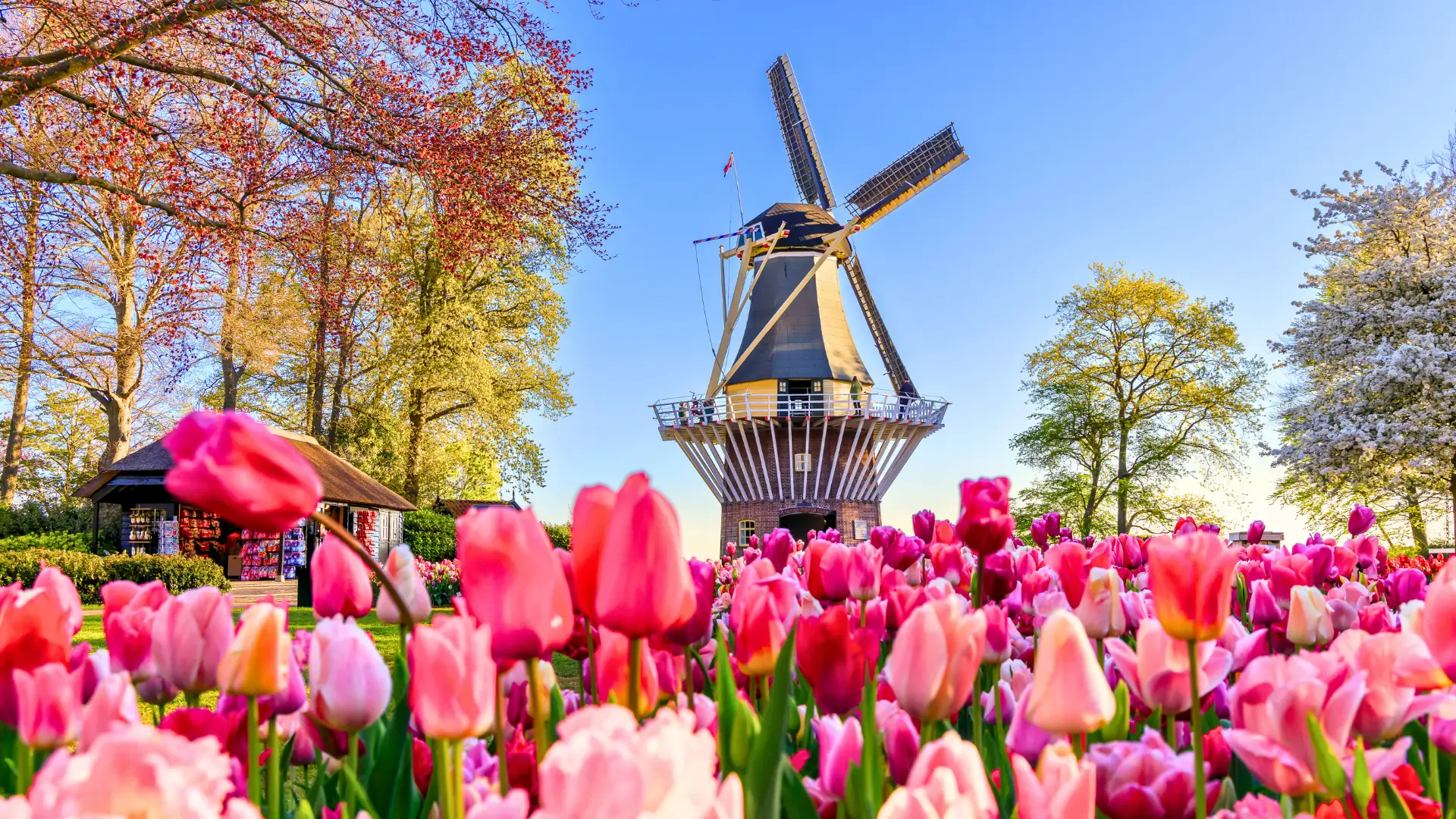
Around a third sits below sea level, which shapes how space and water are managed across the country. The landscape is defined by canals, windmills, and open fields, with tulips in bloom during spring.
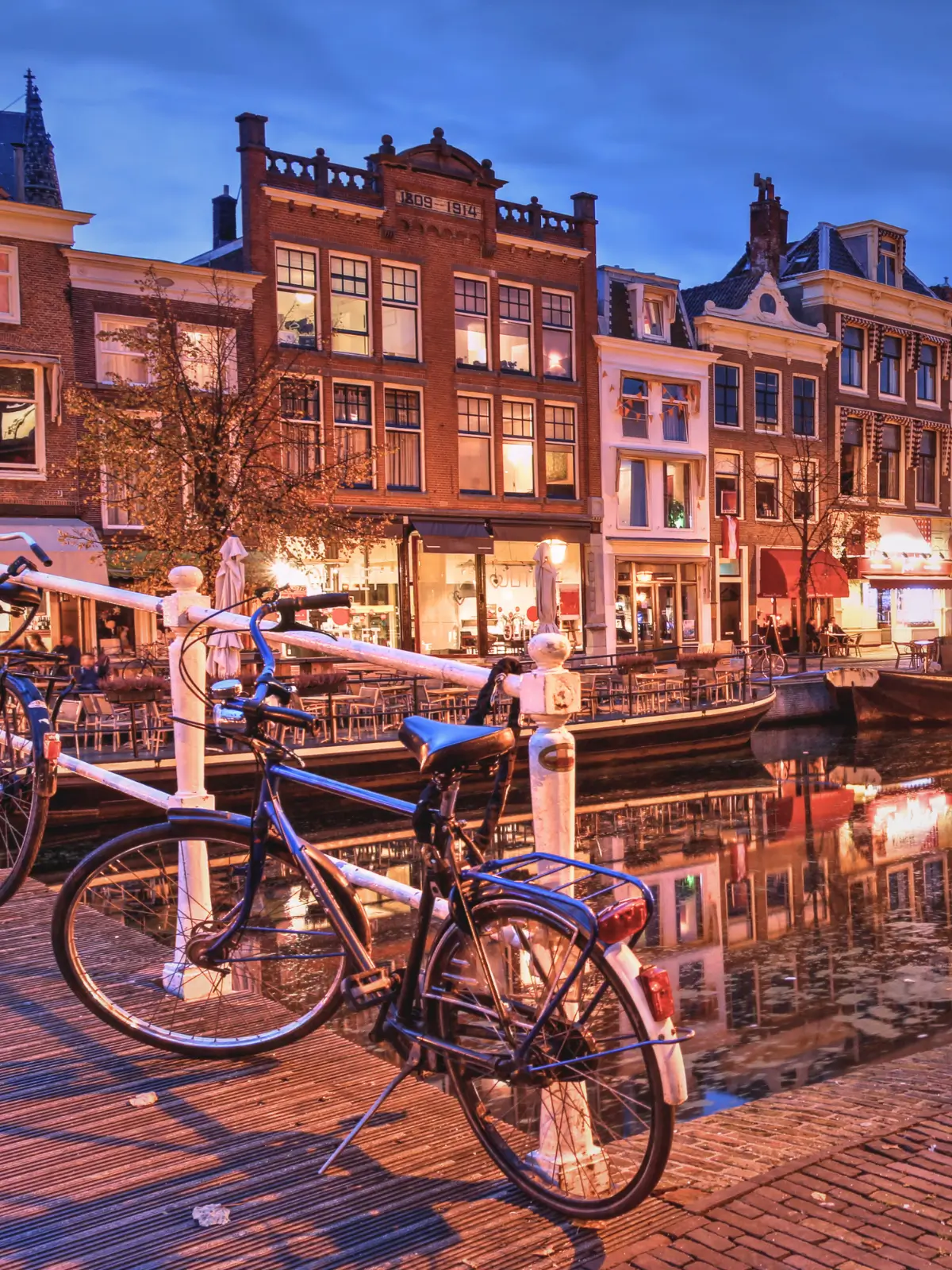
Cities are close together and easy to reach. Amsterdam is known for its canals and museums, while Rotterdam offers a more modern setting with bold architecture and a major port. Cycling is a key part of getting around, supported by extensive bike paths across both cities and smaller towns.
The Netherlands stands out for its focus on planning, infrastructure, and environmental management. Travel feels straightforward, with short distances, reliable transport, and well-connected routes linking cities, towns, and coastal areas.
Did You Know?
- Around 26% of the Netherlands lies below sea level, and much of the country depends on dikes and flood control systems.
- About 60% of the Netherlands is at risk of flooding due to its low elevation and major rivers.
- The Netherlands has more bicycles than people, with over 22 million bikes for a population of around 17.5 million.
- Cycling accounts for about 27% of all trips nationwide, which is one of the highest rates in the world.
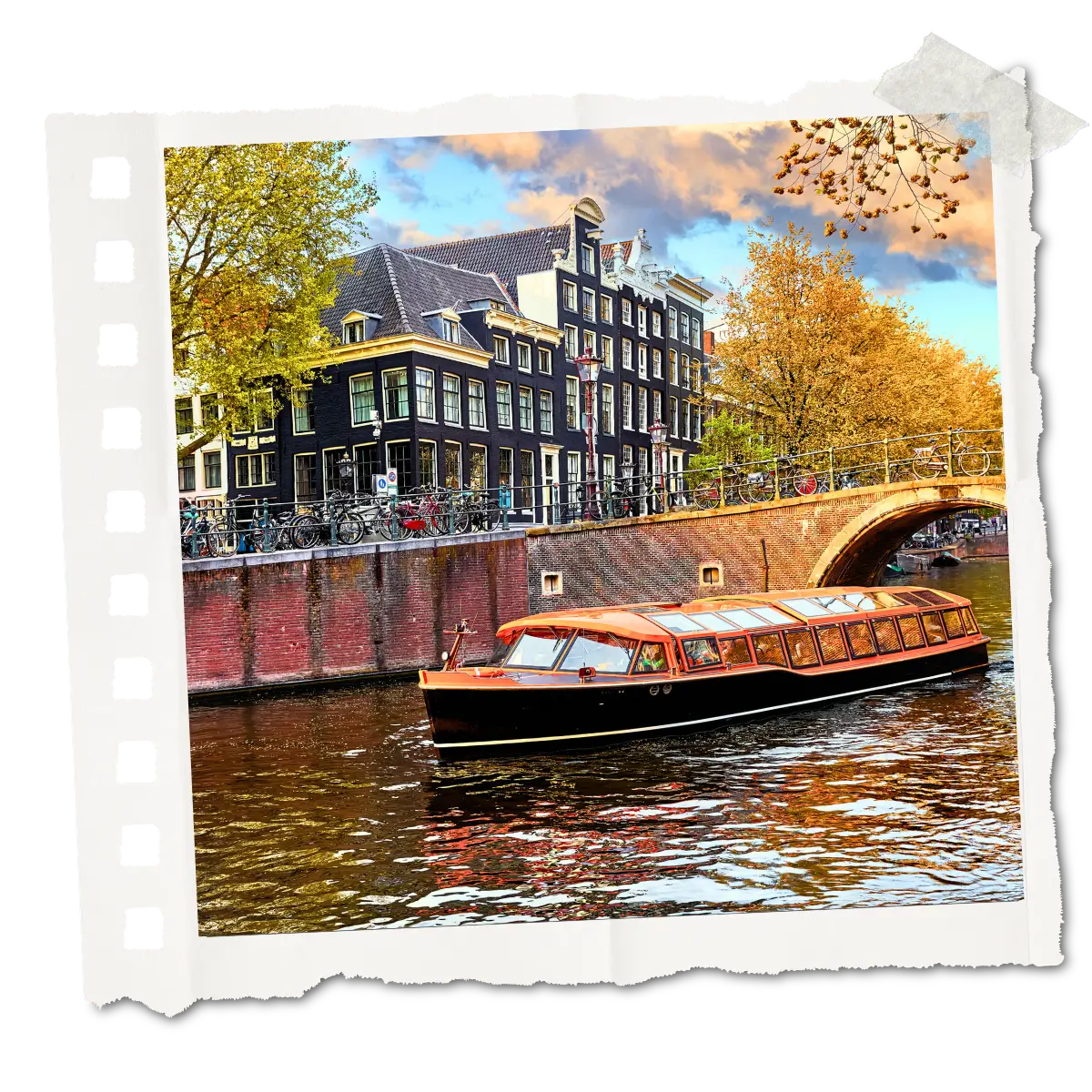
- Amsterdam has over 100 kilometres of canals, which form a UNESCO World Heritage Site.
- Schiphol Airport sits about 3 metres below sea level, which makes it one of the lowest major airports globally.
- The Dutch are among the tallest people in the world, with an average male height of around 183 cm.
- Orange is the national colour because of the royal family, the House of Orange-Nassau.
- The Netherlands has reclaimed about 17% of its land from the sea through polders and drainage systems.
I love exploring new places and sharing the travel tips, food finds, and experiences that help you plan your next adventure.
Join the
Journey
Sign up for new itineraries, travel notes, and practical guides to help you explore the places I love most.
Best Time To Visit the Netherlands
The best time to visit the Netherlands is from April to June. Temperatures rise to around 10–17°C, and the tulip season peaks between mid-April and early May. It’s a good period for walking and cycling, with lower rainfall than later months and longer daylight hours.
July and August bring warmer weather, with average highs around 20–25°C and long daylight hours. This is the busiest period, especially in Amsterdam, and prices increase across accommodation and transport. Rain still occurs regularly, as precipitation is spread across the year.
September to October cools to around 10–18°C, with more frequent rain and fewer visitors across cities. Winter from November to March drops closer to 2–6°C, with short daylight hours, strong winds, and limited sunshine rather than heavy snow.
The Netherlands At A Glance

Language
Dutch is the official language, and it’s spoken across the country. Most people also speak English fluently, especially in cities, tourist areas, and major hotels.

Currency and Costs
Euro (EUR). Approximate rate: 1 USD ≈ 0.84–0.87 EUR, though exchange rates fluctuate. Expect moderate to high daily costs, particularly in Amsterdam and other popular destinations.

Payments
Hotels, restaurants, and larger shops accept cards. Debit and contactless payments are most common, but some smaller places don’t take credit cards.

Tipping
Tipping isn’t expected. Service is included, but rounding up or leaving a small extra amount is common.

Safety
The Netherlands is generally safe for travellers. Still, take normal precautions, especially in busy city centres and on public transport.

Connectivity
Mobile coverage is strong across cities and most regions. Most hotels offer Wi-Fi, and connections are generally reliable throughout the country.
A Detailed Netherlands Itinerary
This 7-day route follows a clear loop through the western Netherlands, where distances are short and trains run frequently. Amsterdam works as the main base for the first half, with nearby towns reached in under 30 minutes.
The route then moves south to Utrecht and continues toward The Hague and Rotterdam, with each leg taking around 30 to 40 minutes. This keeps travel efficient, avoids backtracking, and limits hotel changes while still covering the main regions.
Day 1: Arrival in Amsterdam
Start in the canal ring, where bridges, narrow streets, and small squares connect across the centre. Dam Square and Jordaan are within walking distance from Central Station.
Suggested Stay: Hotel in the canal ring or near Central Station
Base: Amsterdam
Highlights
- Canal ring
- Dam Square
- Jordaan district
Day 2: Amsterdam – Southern Canal Area
Head toward the southern canals, where wider waterways lead to open squares and parkland. Key areas stay close together, with short walks between each stop.
Suggested Stay: Hotel in the canal ring or near Central Station
Base: Amsterdam
Highlights
- Rijksmuseum
- Van Gogh Museum
- Vondelpark
- Leidseplein
Day 3: Zaanse Schans and Haarlem
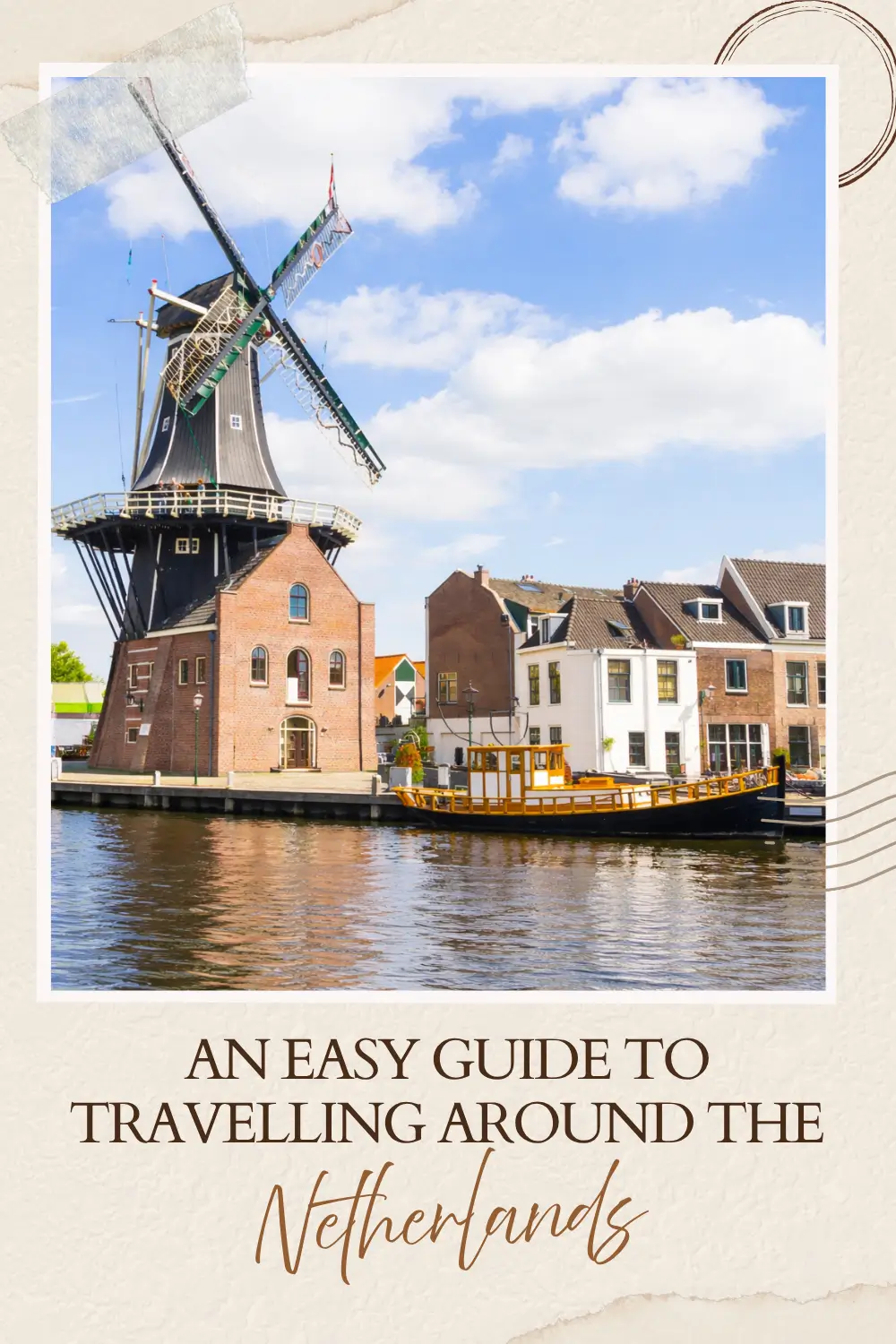
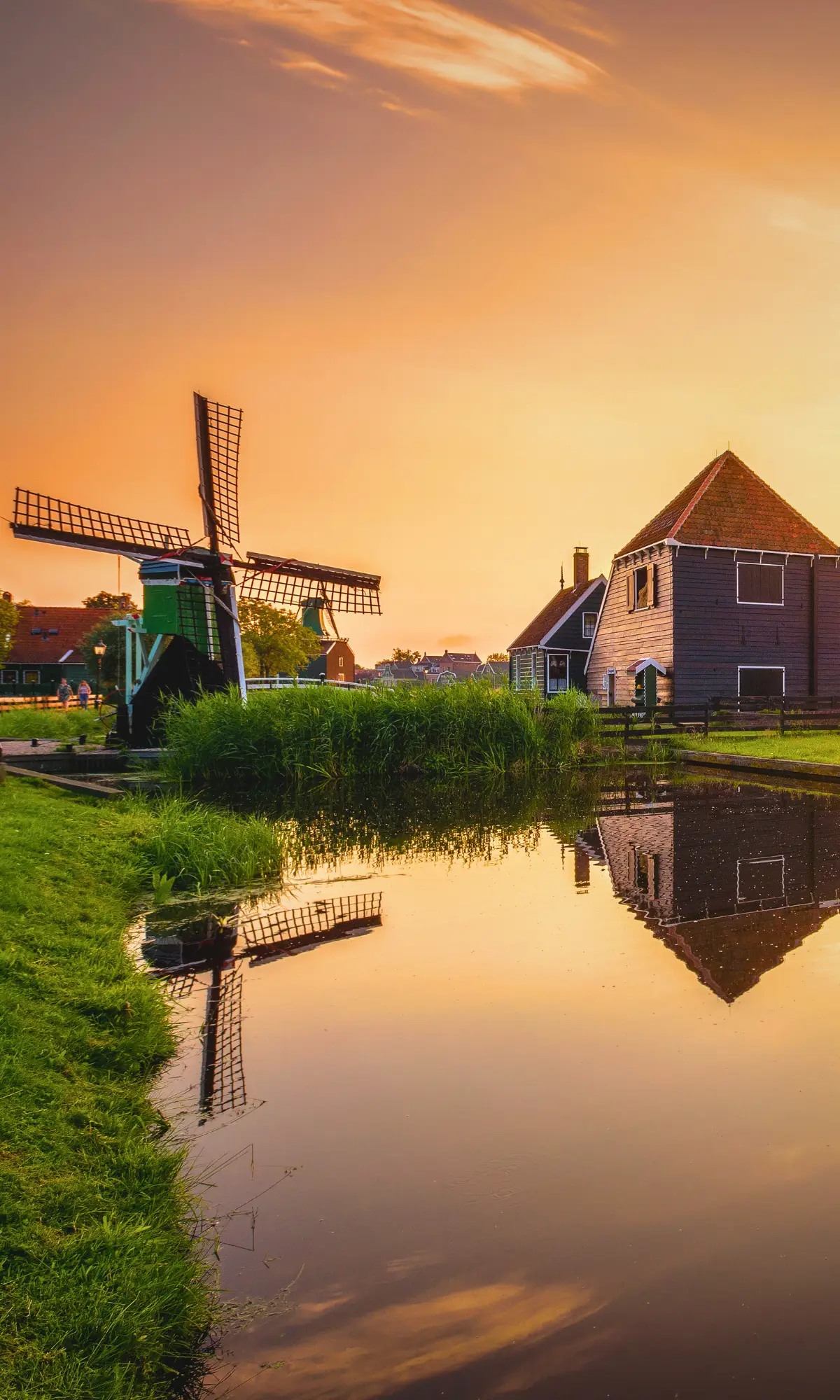
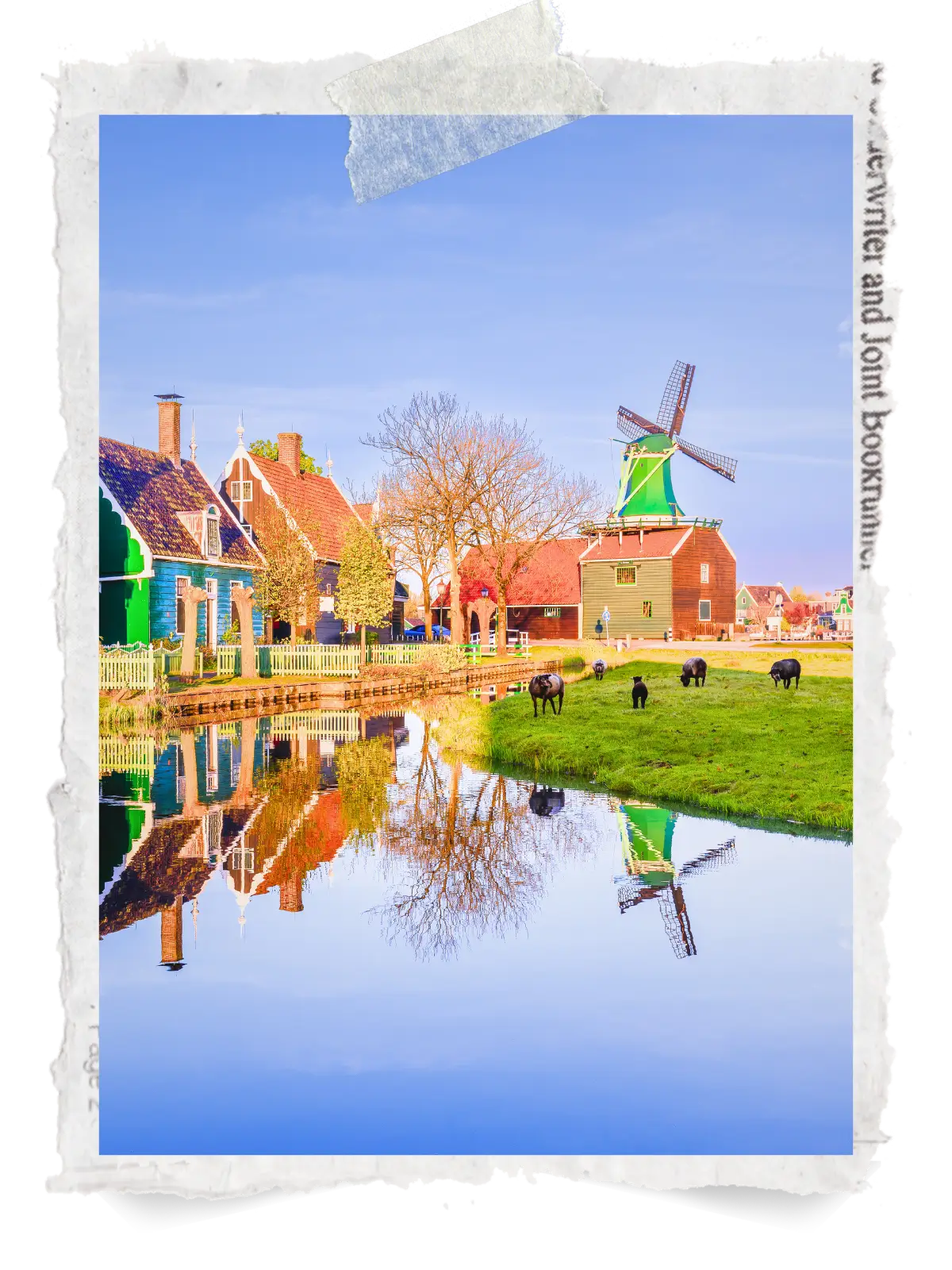
Visit a windmill area outside the city, then continue to Haarlem, a smaller city with a central square and nearby streets. Travel time stays short between each stop.
Suggested Stay: Hotel in the canal ring or near Central Station
Base: Amsterdam
Highlights
- Zaanse Schans windmills
- Haarlem old town
- Grote Markt
Day 4: Delft
Travel to Delft, known for canals and a compact centre. Streets form a loop around the main square, with churches and canals within a short distance.
Suggested Stay: Hotel in the canal ring or near Central Station
Base: Amsterdam
Highlights
- Delft old town
- Nieuwe Kerk
- Market Square
Day 5: Amsterdam to Utrecht
Take a short train to Utrecht. Canals run below street level, with cafés along the water and short distances between main areas.
Suggested Stay: Hotel near Utrecht city centre
Route: Amsterdam to Utrecht
Highlights
- Dom Tower
- Oudegracht canal
- Historic centre streets
Day 6: The Hague and Rotterdam
Stop in The Hague to see government buildings and the coast, then continue to Rotterdam. The city shifts from historic streets to a modern skyline near the river.
Suggested Stay: Hotel in Rotterdam city centre
Route: Utrecht to The Hague to Rotterdam
Highlights
- Binnenhof
- Scheveningen coast
- Erasmus Bridge
- Rotterdam skyline
Day 7: Rotterdam and Departure
Stay near the centre, where the station and river are close together. Main areas are within walking distance before heading to the airport.
Suggested Stay: Hotel near Rotterdam Central Station
Base: Rotterdam
Highlights
- Markthal
- Cube Houses
- Witte de Withstraat
Things To Know Before Visiting the Netherlands
1. Debit Cards Are Widely Used
The Netherlands relies heavily on debit cards, and credit cards aren’t always accepted, even in supermarkets. Some places only accept specific card types or contactless payments, which can catch people off guard.
2. Bike Lanes Are Strictly For Cyclists
Bike lanes are everywhere, and cyclists move fast and expect a clear path. Stepping into one without checking can lead to accidents, even on side streets or less busy areas.
Cyclists often move faster than expected, which makes this easy to misjudge.
3. Public Toilets Usually Require Payment
Public toilets usually cost around €0.50–€1.00 (about $0.55–$1.10 USD). You’ll often need coins or contactless payment to enter. Even fast food places and train stations usually charge a fee.
4. Trains Are The Main Way To Travel Between Cities
The train network connects most cities quickly and efficiently, often replacing the need for domestic flights. Journeys between major cities usually take under an hour. Many people rely on trains for daily travel.
5. Card Payments Are More Common Than Cash
Cash is still accepted in many places, but card payments are far more common. Some shops operate as card-only, and ATMs are less common than before. You won’t need much cash for daily use.
6. Weather Can Change Several Times A Day
The Netherlands has a mild climate, and rain can appear at any time of year. Wind is common, especially in coastal areas. A light waterproof jacket helps year-round.
7. Cities Are Compact and Easy To Get Around
Distances between main areas are short, and most cities are easy to walk or cycle. You won’t need long travel times within places like Amsterdam or Utrecht. This affects how you plan your day.
8. Supermarkets Follow Their Own Payment Systems
How to Get There
Entry Requirements and Visas
The Netherlands is part of the Schengen Area, and entry rules follow Schengen regulations. You can stay for up to 90 days within a 180-day period, depending on your nationality.
Your passport must be issued within the last 10 years and remain valid for at least 3 months after departure.
Main Airports
Amsterdam Airport Schiphol is the main international gateway. It has direct and connecting flights across Europe and major global hubs.
It’s one of the busiest airports in Europe and handles most long-haul arrivals. Eindhoven Airport and Rotterdam The Hague Airport mainly serve short-haul and low-cost routes within Europe.
Flights and Routes
The Netherlands has strong flight connections across Europe, along with routes to North America, Asia, and the Middle East.
Many journeys connect through hubs like Amsterdam, London, Paris, and Frankfurt. Short-haul flights run frequently between nearby European cities.
Trains and Land Borders
The Netherlands borders Belgium and Germany, and crossings are open within the Schengen zone.
High-speed and regional trains connect Amsterdam with cities like Brussels, Paris, and London. Border checks are rare, but they can happen occasionally.
Ferries and Alternative Entry Points
Ferries connect the Netherlands with the United Kingdom through ports like Rotterdam and IJmuiden.
Routes from Hull and Newcastle run regularly and often operate overnight. These crossings work well if you’re travelling with a car or want a slower arrival option.
What to Expect
Public Transport Uses A Tap System
Public transport works on a check-in and check-out system across trains, trams, and buses.
You need to tap at the start and end of each journey using the same card or device.
If you miss a check-out, you can be charged a higher default fare.
Supermarkets Use Self-Checkout As The Default
Self-checkout is common in Dutch supermarkets, especially in larger chains. You scan items yourself and pay at automated machines instead of going to a cashier. Some stores have very few staffed tills.
Tap Water Isn’t Always Served In Restaurants
Tap water is safe to drink across the country. Restaurants usually don’t serve it automatically and often offer bottled water first. You’ll need to ask if you want tap water.
Train Travel Replaces Domestic Flights
Travel between cities relies on trains rather than flights. Routes are short, frequent, and well-connected across the country. Domestic air travel isn’t part of everyday travel here.
Homes Often Have Large Uncovered Windows
Many homes keep curtains open, even in the evening. This reflects a local habit and isn’t seen as unusual. Walking through neighbourhoods can feel more exposed than expected.
Events Can Take Over Entire Cities
Events like King’s Day can change how cities operate for the entire day. Streets fill up, and transport becomes crowded. Plans often need adjusting during major events.
Outdoor Seating Fills Quickly In Good Weather
Cafés and bars focus on terraces, and people head outside when the weather improves. Seats fill quickly, even with short periods of sunshine. Finding a table can take time in busy areas.
Getting Around the Netherlands
Long Distance Trains
Trains are the easiest way to move between cities. The network covers the whole country and runs often throughout the day.
Trips between places like Amsterdam and Rotterdam are quick, usually under an hour. You don’t need to reserve seats, but trains can get busy at peak times.
Regional Trains
Regional trains take you to smaller towns and places outside the main routes.
They don’t run as often as intercity trains, and timings can feel more fixed. You’ll use them when heading somewhere less central.
City Public Transport
Cities run on trams, buses, and metro lines, depending on where you are. Services start early and usually run until around midnight.
After that, night buses take over but don’t run as often. Amsterdam leans on trams, while Rotterdam has a stronger metro system.
Buses
Buses fill the gaps where trains don’t go, especially in smaller towns. They follow set schedules and don’t always run late into the evening. In quieter areas, they might be your only option.
Long Distance Buses
Long-distance buses connect cities in the Netherlands with nearby countries. They’re cheaper than trains but take longer and don’t run as often. They work best if you’re trying to keep costs down.
Car Rental and Driving
Driving feels straightforward, and roads are in good condition. Traffic builds up around cities, especially during rush hour.
Parking in city centres is limited and expensive, which makes cars more useful for countryside trips.
Taxis and Ride-Hailing Apps
Taxis are easy to find in cities, but can be pricey. Ride-hailing apps like Uber are widely used and often more convenient. Outside major cities, options are more limited.
Ferries
Ferries run in a few places, especially in Amsterdam. Some routes are free and part of the public transport system. They’re mostly for short crossings rather than long trips.
Join the
Journey
Sign up for new itineraries, travel notes, and practical guides to help you explore the places I love most.
I love exploring new places and sharing the travel tips, food finds, and experiences that help you plan your next adventure.