Your journey, beautifully planned.

Planning A Trip To Belgium Travel Guide
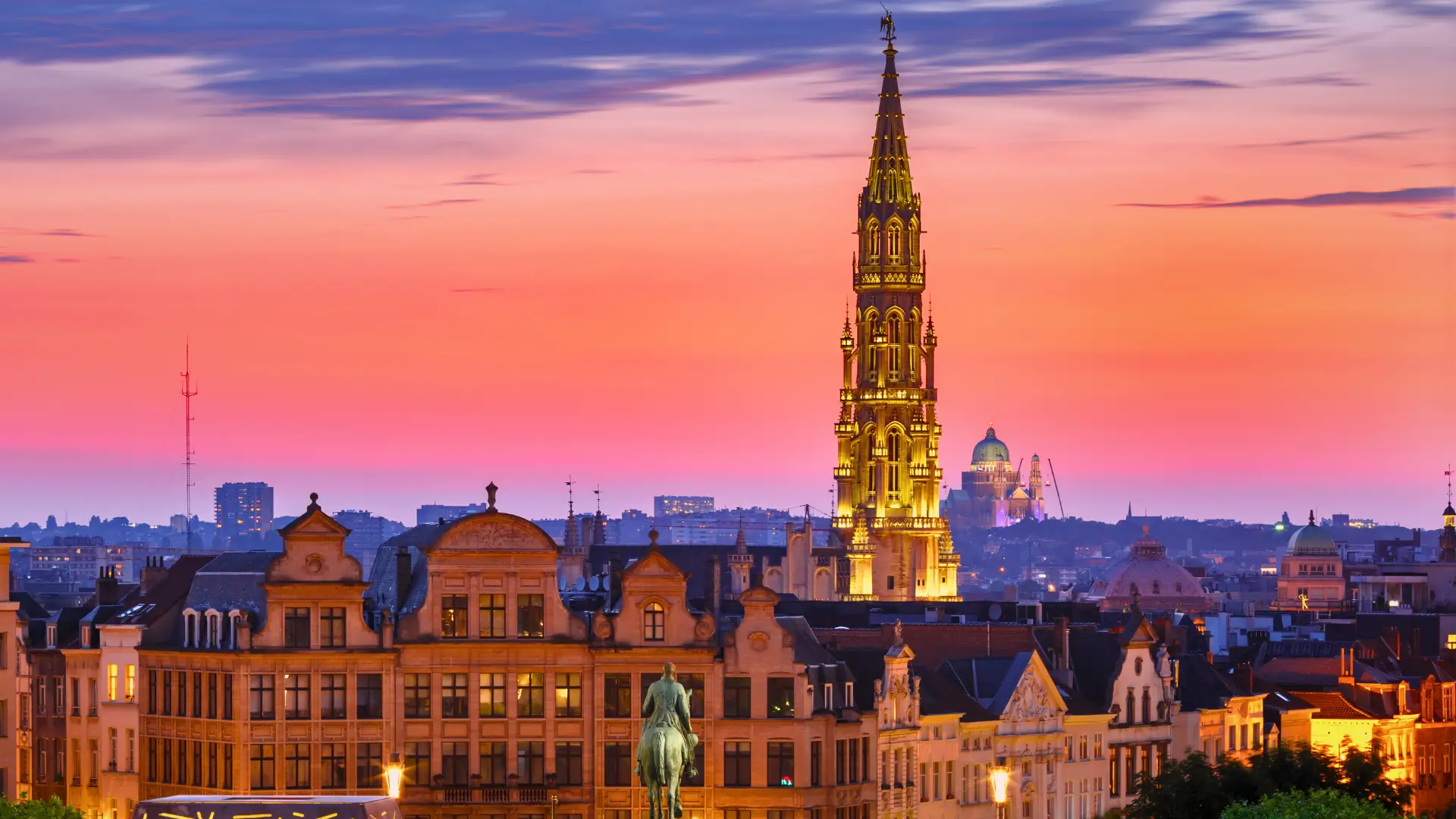
Brussels skyline at sunset with illuminated Gothic tower and historic rooftops in the city centre.
Belgium is an absolute dream for history enthusiasts and chocolate lovers! Though the country is small, it plays a massive role on the global stage. There are over 3,000 castles to explore, poignant World War battlegrounds to honour, and practically every type of museum imaginable. It’s the kind of place where every cobblestone street seems to whisper a story from the past.

After a full day of historical discovery, it’s time to kick back at one of the country’s 1,000 breweries. Nothing beats sipping a world-class beer while munching on a mountain of crispy, golden frites.
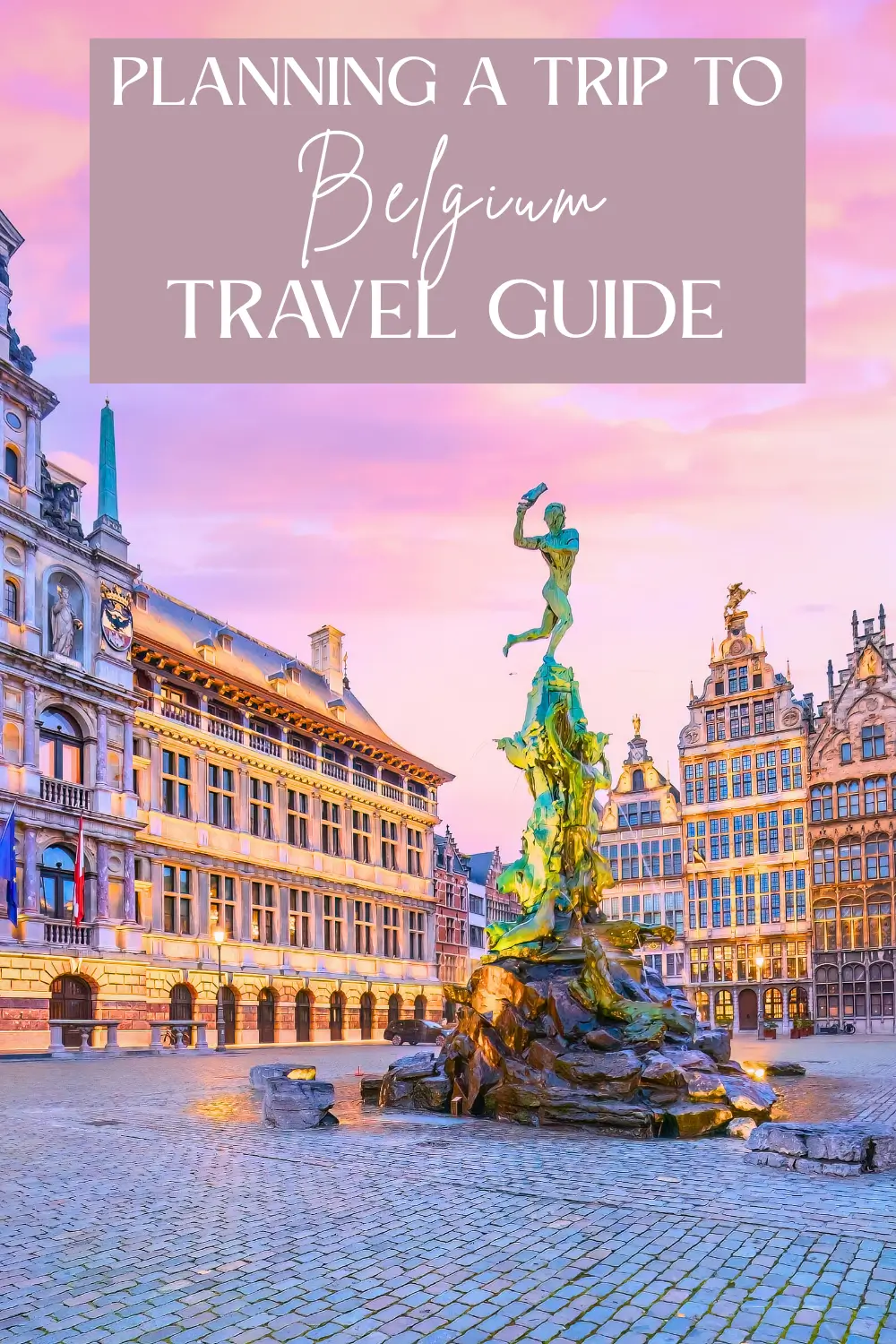
Brabo Fountain in Grote Markt square with historic guild houses in Antwerp, Belgium at sunset.
To top it all off, there is all the gourmet chocolate one could desire! While many travellers pass through Brussels or Bruges for a day, those who take the time to dig deeper will find that Belgium is packed with hidden gems just waiting to be discovered.

Did You Know?

  • Belgium produces about 1,500 types of beer. Brewers created so many styles that UNESCO officially recognised Belgian beer culture as part of the Intangible Cultural Heritage of Humanity.

  • French fries likely originated in Belgium, not France. Villagers along the Meuse River fried potatoes in the late 1600s when winter ice stopped them from catching fish.

  • Belgium gave the world the saxophone. Inventor Adolphe Sax patented the instrument in 1846 and changed the sound of jazz, blues, and modern music.

  • Belgian chocolatiers transformed chocolate into luxury pralines. The Neuhaus family perfected filled chocolates in 1912 and helped make the country famous for premium sweets.

  • Brussels functions as the political centre of Europe. The city hosts key institutions of both the European Union and NATO.

  • A few monasteries here brew authentic Trappist beer. Only a small group of monasteries worldwide holds permission to produce this rare style.

  • Waffles, fries, and mussels with fries, called moules-frites, rank among the nation’s most recognisable dishes.

I love exploring new places and sharing the travel tips, food finds, and experiences that help you plan your next adventure.

Join the
Journey

Sign up for new itineraries, travel notes, and practical guides to help you explore the places I love most.

Best Time to Visit Belgium

Spring and early summer are among the best times to visit Belgium. From April to June, temperatures usually range between 10°C and 16°C. Parks and public squares fill with flowers, and outdoor cafés begin to open across cities such as Brussels, Bruges, and Ghent. Attractions are active but often less crowded than in peak summer.
Autumn is another pleasant time to visit. From September to October, temperatures usually stay between 11°C and 15°C. Trees around canals and parks turn gold and red, and accommodation prices often drop compared with July and August.
Winter creates a festive travel season. From December to February, temperatures usually range between 2°C and 7°C. Christmas markets appear in many city squares, selling waffles, hot chocolate, and local beer. Cities decorate their historic centres with lights and seasonal displays, so warm clothing is recommended.
Warm Months Transitional Months Cool Months

Belgium At A Glance

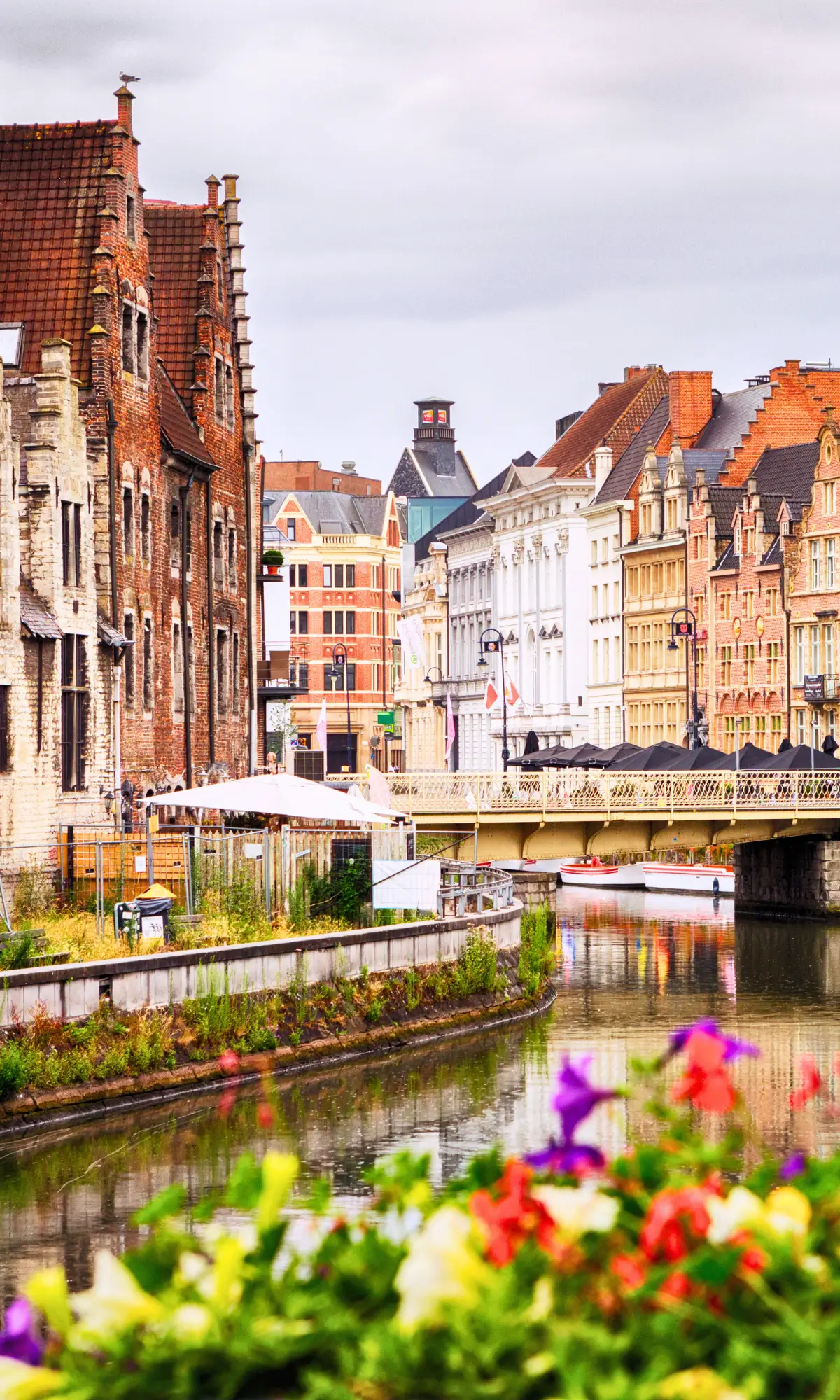
Historic buildings along a canal with a bridge and colourful flowers in Ghent, Belgium.
Language selection icon showing two speech bubbles with letter A and Chinese character.

Language

Belgium has three official languages. Dutch, French, and German are spoken in different regions. English is common in tourist areas and major hotels, but most people speak Dutch or French in regular conversations.

Illustration of a money bag with dollar symbol next to stacked coins.

Currency and Costs

Euro (EUR). Approximate rate: 1 USD ≈ 0.90–0.95 EUR, though exchange rates change. Daily costs are moderate, with higher prices in Brussels, Bruges, and major tourist areas.

Mobile payment icon with credit card and phone showing confirmed payment

Payments

Hotels, restaurants, and larger shops accept credit and debit cards. Many visitors rely on cards. Bring some cash for smaller businesses, taxis, and neighbourhood markets.

Hand holding a dollar sign and heart icon representing tipping.

Tipping

Tipping is not expected. Restaurant bills normally include service, though leaving small change for good service is common.

Shield with checkmark and padlock as safety icon.

Safety

Belgium is considered safe for visitors. As in most cities, stay alert in crowded areas and busy transport hubs.

Wi-Fi connectivity icon for travel and accommodation.

Connectivity

Mobile networks cover most cities and towns. Hotels typically provide Wi-Fi. Internet access is reliable across most of the country.

A Detailed Belgium Itinerary

This itinerary follows a simple west–east route across Belgium, starting in Brussels, continuing through Flanders’ historic cities, and finishing back in the capital.
The route groups nearby destinations together and avoids unnecessary backtracking. Distances are short, and Belgium’s rail network connects the main cities quickly, making trains the easiest way to travel.
Accommodation changes are kept minimal to keep the trip manageable. Brussels, Bruges, and Antwerp act as the 3 main bases, allowing nearby places to be explored without constant packing and transfers. Most journeys take under 1 hour.

Day 1: Arrival in Brussels

Most travellers arrive in Brussels through Brussels Airport or Brussels Midi station. Accommodation near the historic centre provides quick access to the main squares, museums, and pedestrian streets.
Keep the first day lightly planned. Use the time to settle in and explore the nearby neighbourhood.

Suggested Stay: Historic hotel or boutique guesthouse near Grand Place, Sablon, or Saint-Géry district

Base: Brussels

Highlights

  • Grand Place
  • Galeries Royales Saint-Hubert
  • Manneken Pis
  • Saint-Géry district cafés

Day 2: Brussels – Historic Centre and Museums

Focus on Brussels’ central districts. The main landmarks, museums, and royal buildings sit within a relatively compact area. Most places are reachable on foot. Trams and the metro connect nearby neighbourhoods when needed.

Suggested Stay: Same accommodation in Brussels historic centre

Base: Brussels

Highlights

  • Royal Palace of Brussels
  • Mont des Arts terraces
  • Magritte Museum
  • Parc de Bruxelles

Day 3: Ghent (Day Trip)

Ghent sits about 35 minutes from Brussels by train. The city works well as a day trip because trains run frequently. The historic centre lies around canals and medieval streets. Most of the area is walkable.

Suggested Stay: Same accommodation in Brussels historic centre

Base: Brussels

Highlights

  • Gravensteen Castle
  • St Bavo’s Cathedral
  • Graslei and Korenlei canals
  • Ghent Belfry

Day 4: Brussels to Bruges

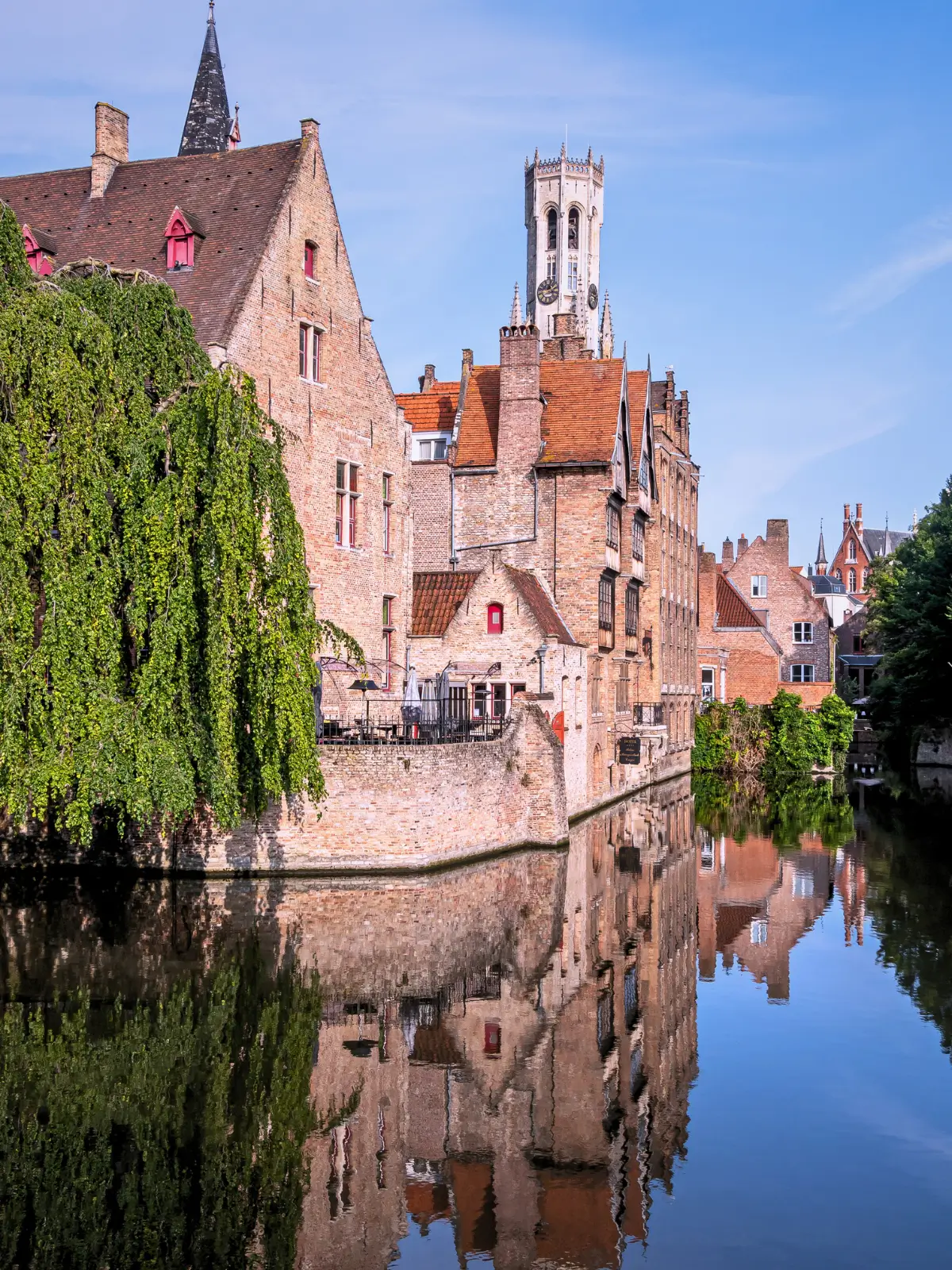
Travel west to Bruges. The train journey from Brussels takes about 1 hour. Accommodation inside the historic centre places most landmarks within walking distance.

Suggested Stay: Canal-side hotel or historic townhouse in Bruges Old Town near Markt Square or Dijver Canal

Route: Brussels to Bruges

Highlights

  • Bruges canals
  • Markt Square
  • Belfry of Bruges
  • Burg Square
Medieval brick houses and church tower reflected in a calm canal in Bruges, Belgium.
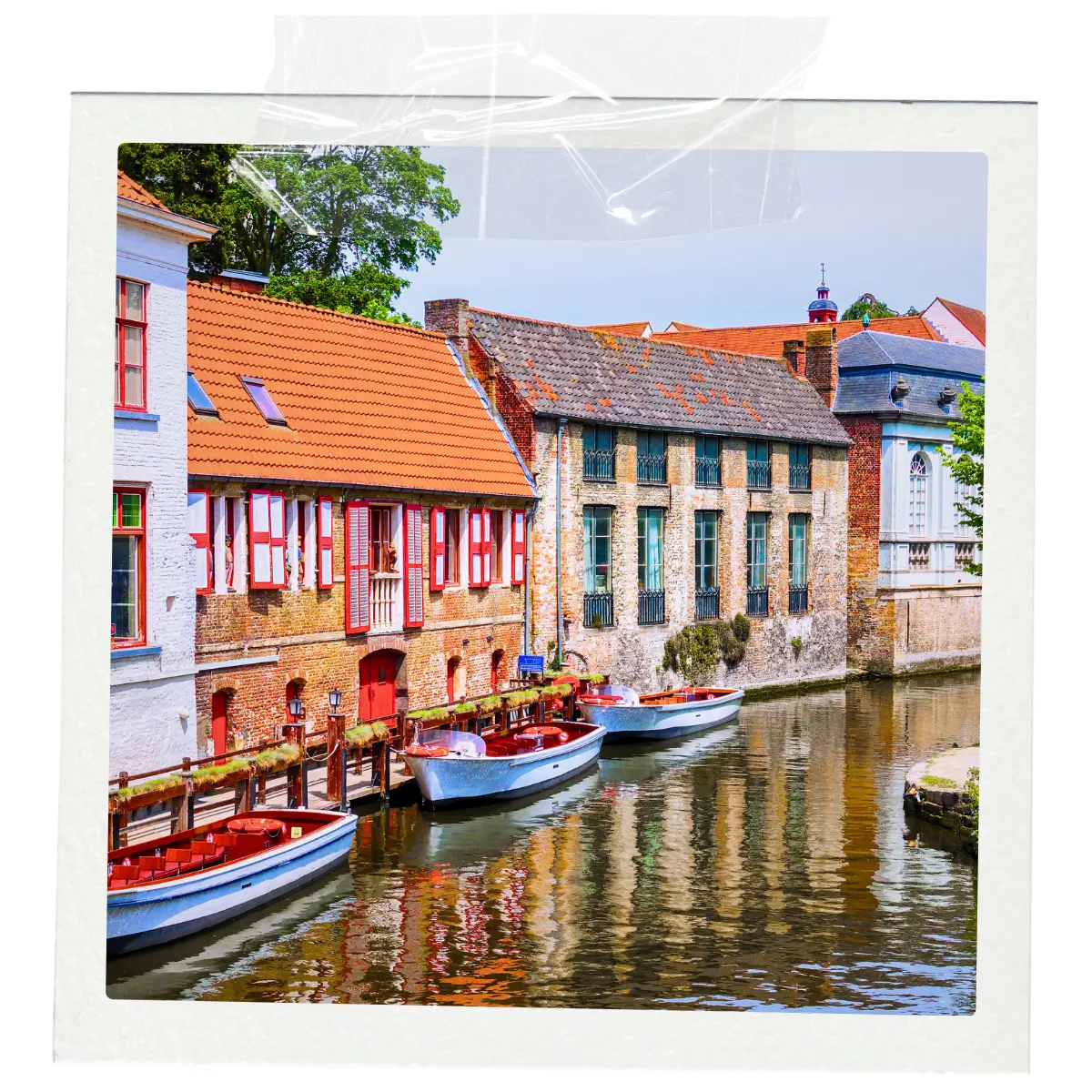
Colourful historic houses and small boats along a canal in Bruges.

Day 5: Bruges – Historic Centre

Spend the day exploring Bruges beyond the busiest squares. The old town is compact and easy to explore on foot. Quiet canals, courtyards, and churches sit throughout the historic centre.

Suggested Stay: Same accommodation in Bruges Old Town

Base: Bruges

Highlights

  • Basilica of the Holy Blood
  • Church of Our Lady
  • Begijnhof courtyard
  • Minnewater Lake

Day 6: Bruges to Antwerp

Continue east to Antwerp. The train journey from Bruges to Antwerp takes about 2 hours via Brussels. Antwerp’s historic centre sits around the cathedral square and the Scheldt riverfront.

Suggested Stay: Boutique hotel or city hotel near Groenplaats, Cathedral Square, or Antwerp historic centre

Route: Bruges to Antwerp

Highlights

  • Antwerp Central Station
  • Cathedral of Our Lady
  • Grote Markt
  • Scheldt riverfront

Day 7: Antwerp and Return to Brussels

Explore Antwerp’s central districts before returning to Brussels for departure. Trains run frequently between Antwerp and Brussels. The journey takes about 45 minutes.

Route: Antwerp to Brussels

Highlights

  • Rubens House
  • MAS Museum rooftop views
  • Antwerp Diamond District
  • Antwerp Central Station hall
Beige washi tape strip with soft torn edges on a transparent background.

Things To Know Before Visiting Belgium

1. Train Travel Is The Easiest Way To Get Around

Belgium has one of the easiest rail systems in Europe. Trains connect Brussels, Bruges, Ghent, and Antwerp in under an hour. You usually don’t need a car unless you’re exploring smaller towns or rural areas. 

Always check the departure boards because platforms can change shortly before the train arrives.

2. Watch For Pickpockets Around Major Train Stations

Busy transport hubs like Brussels Midi, Brussels Central, and Antwerp Central can attract pickpockets, especially during rush hours and peak travel seasons.
Keep bags zipped and avoid leaving phones or wallets in outer pockets. Most travellers won’t experience issues, but staying alert in crowded stations helps.

3. Public Toilets Often Charge A Small Fee

Many train stations, shopping centres, and busy tourist areas charge a small fee to use public toilets. The fee is usually around €0.50 to €1 – $0.55 to $1.10 USD. Carry a few coins so you don’t need to search for change when you need it.

4. Many Museums Close On Mondays

Travellers sometimes plan museum visits at the start of the week and find them closed. Many museums across Belgium close on Mondays. Plan cultural visits between Tuesday and Sunday to avoid disappointment.

5. Bike Traffic Moves Quickly In Cities

Cities like Ghent, Antwerp, and Brussels have a strong cycling culture. Cyclists move quickly through dedicated lanes and shared streets. Always check both directions before stepping into a bike lane, even in busy pedestrian areas.

6. Day Trips Are Easy, But Evenings Feel Different

Many travellers visit Bruges or Ghent as day trips from Brussels. After the tour groups leave, the historic streets and canals become quieter. Staying overnight lets you enjoy the atmosphere without daytime crowds.

7. Belgian Beer Culture Is Taken Seriously

Belgium produces hundreds of beer styles, including Trappist and abbey beers brewed with centuries of tradition. Bars often serve each beer in its own glass. If you enjoy beer, try local brews instead of sticking to international brands.

How to Get There

Flying Into Belgium

Most travellers arrive through Brussels Airport, the country’s main international airport. It connects Belgium with major cities across Europe, North America, the Middle East, and other regions.
The airport links directly to Belgium’s national rail network. From there, trains run frequently to cities such as Brussels, Bruges, Ghent, and Antwerp, making onward travel easy.

Entry Requirements

Belgium follows the Schengen Area immigration rules. Entry requirements depend on your nationality. Travellers from many countries can enter visa-free for short tourist visits, usually up to 90 days within a 180-day period.
Your passport should normally remain valid for at least three months beyond your planned departure from the Schengen area. Border officers may also request proof of accommodation, return tickets, or travel plans.

Arriving By Train

Belgium’s central location in Western Europe makes train travel a convenient way to enter the country. High-speed rail services connect Brussels with cities such as Paris, Amsterdam, London, and Cologne.
Most international trains arrive at Brussels Midi, the main station for international rail connections. From there, frequent domestic trains run to cities across Belgium.

Arriving By Road

Belgium borders France, the Netherlands, Germany, and Luxembourg. Well-maintained highways make driving between these countries straightforward.
International bus companies also operate regular routes into Belgium from nearby cities. Many buses arrive in Brussels, though some services also stop in other major Belgian cities.

What to Expect

Station Names May Appear In Dutch Or French

Major stations often display different names depending on the language used. For example, Brussels Midi may also appear as Brussel-Zuid, and Brussels Central may appear as Brussel-Centraal. These names refer to the same stations, which can confuse travellers reading train boards or tickets.

Many Shops Close Earlier On Sundays

Retail shops often close on Sundays, especially outside main shopping streets. Restaurants and cafés usually stay open, but clothing stores and smaller businesses may not operate that day. If you plan to shop, handle it earlier in the week.

Restaurant Kitchens May Close Between Meal Hours

Many restaurants stop serving hot food between lunch and dinner. Travellers exploring in the afternoon sometimes discover that kitchens have already closed. Cafés, snack bars, or friteries often remain open during this gap.

Public Transport Tickets Must Be Validated

Some buses, trams, and metro systems require you to validate tickets when boarding or entering the platform. Inspectors occasionally check tickets during the ride. Travellers who forget to validate them may receive fines.

City Centres Restrict Vehicle Access

Many historic areas limit vehicle traffic or use pedestrian zones. Visitors who drive into these areas sometimes struggle with navigation or parking restrictions. Walking and public transport usually work better for exploring central districts.

Train Platforms Can Change Shortly Before Departure
Belgian train stations sometimes update platform numbers close to departure time. Travellers who wait at the wrong platform may miss trains. Always check the electronic boards shortly before boarding.
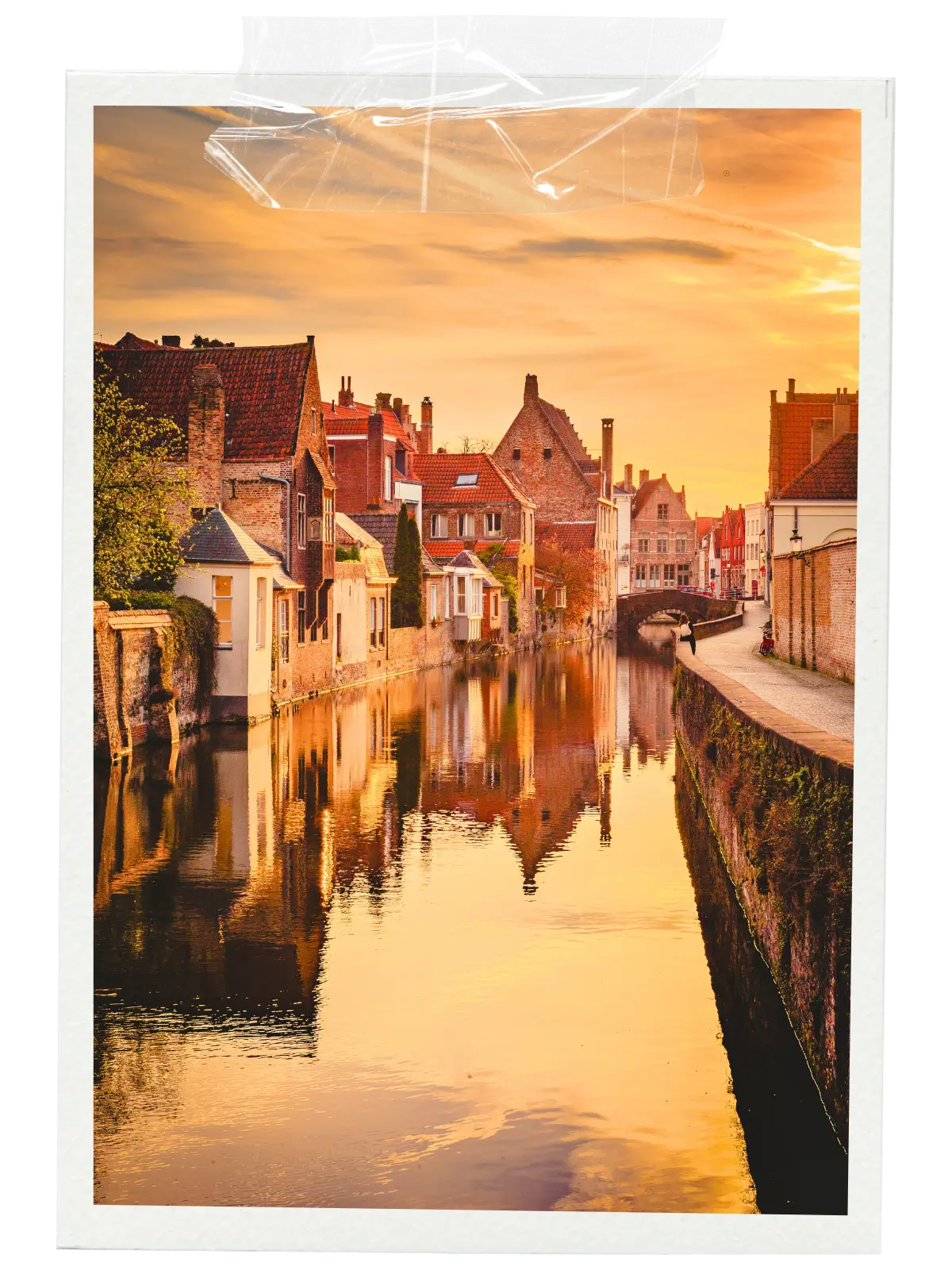
Sunset reflecting on a quiet canal lined with historic houses in Bruges.
Colourful historic houses and small boats along a canal in Bruges.

Getting Around Belgium

Trains

Trains offer one of the easiest ways to travel across Belgium. The national railway network links major cities such as Brussels, Bruges, Ghent, Antwerp, and Leuven. Services run frequently throughout the day. Many journeys between major cities take less than an hour. This makes day trips simple and convenient.
Travellers usually buy tickets online, from station machines, or at ticket counters before boarding. Stations display electronic departure boards with platform numbers and departure times. It helps to check the board again shortly before your train leaves.

Trams, Buses, And Metro

Public transport plays an important role in Belgian cities. Brussels operates a metro system along with trams and buses. Cities such as Antwerp and Ghent rely mainly on tram networks.
You can buy tickets at machines, kiosks, or through mobile apps. Passengers normally scan or validate tickets when entering stations or boarding vehicles. Transport inspectors sometimes check tickets during the journey.

Cycling

Cycling is a common way to move around many Belgian cities, especially in the north. Cities such as Ghent and Antwerp include dedicated bike lanes and strong cycling infrastructure.
Bike-sharing systems and rental shops are widely available. These services make short rides around city centres easy. Travellers should pay attention to bike lanes while walking. Cyclists often move quickly through busy streets.

Walking

Historic city centres in Belgium are compact and easy to explore on foot. Cities such as Bruges and Ghent contain pedestrian streets, canals, and central squares located close together.
Walking often becomes the best way to explore central districts. In these areas, trams, bicycles, and pedestrians share narrow streets.

Driving

Driving can help if you plan to visit smaller towns or rural areas. However, it is often less convenient inside major cities. Parking may be limited or expensive. Some cities also operate low-emission zones that restrict certain vehicles.
Because of this, many visitors rely on trains and public transport when travelling between Belgian cities.

Join the
Journey

Sign up for new itineraries, travel notes, and practical guides to help you explore the places I love most.

Portrait of Manu smiling against a neutral background.

I love exploring new places and sharing the travel tips, food finds, and experiences that help you plan your next adventure.

Leave a Comment

Your email address will not be published. Required fields are marked *

Scroll to Top
Ultimate packing checklist travel guide cover with tropical beach background.