
Choosing the Best eSIM vs Physical SIM for Travel
Home » Trip Planning » Choosing the Best eSIM vs Physical SIM for Travel
Choosing between an eSIM vs physical SIM can affect how you stay connected when you travel.
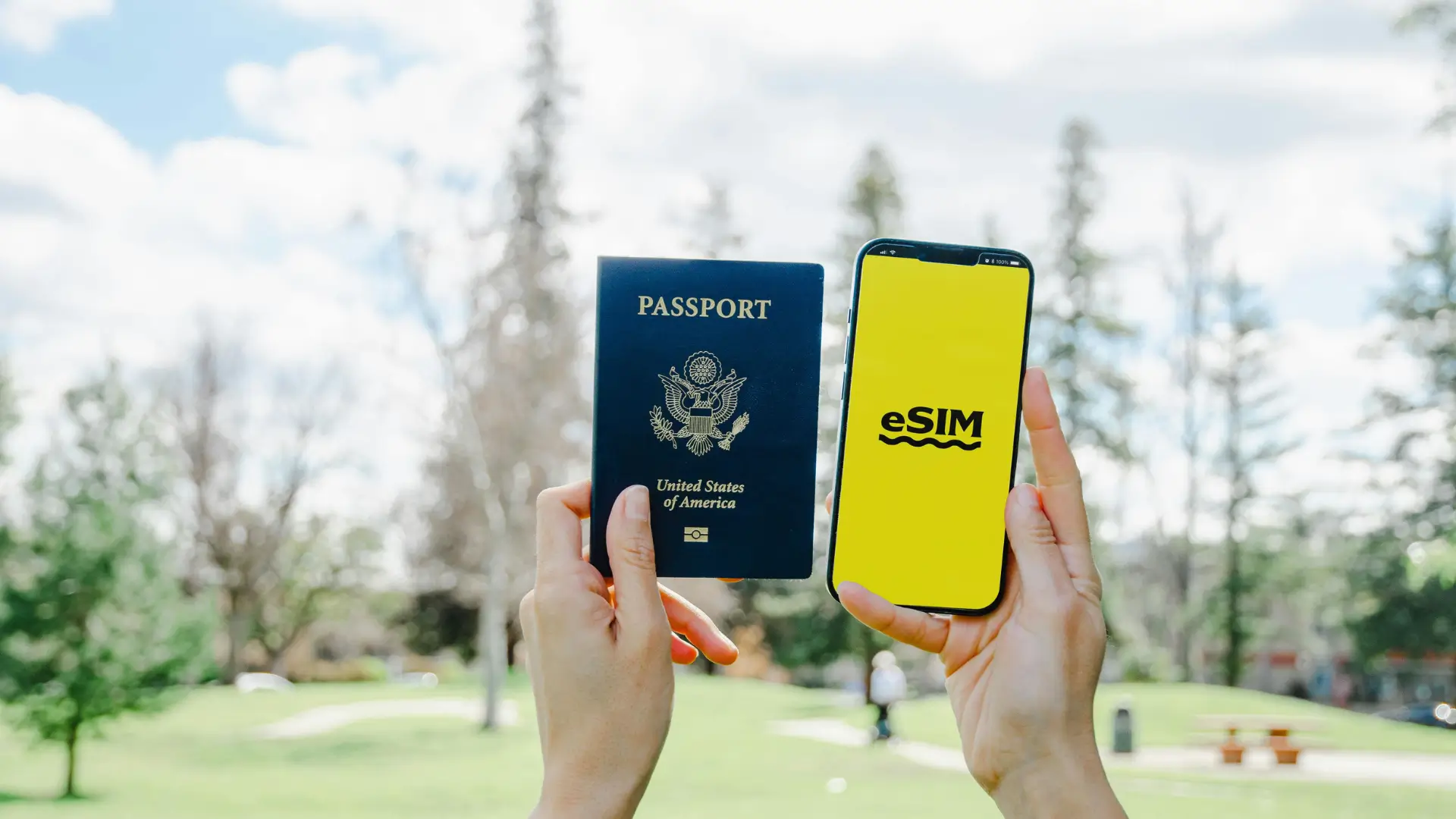
Both let your phone connect to a mobile network, but they work differently. An eSIM is built into a compatible device, while a physical SIM is a removable card.
For international travel, an eSIM can be convenient because you can arrange a plan before departure. A physical SIM still has advantages. It can be useful if your phone doesn’t support eSIM, you need a local number, or a local prepaid plan offers better value.
The right option depends on your phone, destination, trip length, and what you need from your mobile plan while you’re away.
eSIM vs Physical SIM: What’s the Difference?
A physical SIM is the small removable card that goes into your phone’s SIM tray. It contains the information your device needs to identify your mobile subscription and connect to a network.
An eSIM, or embedded SIM, serves the same basic purpose without a removable card. The eSIM hardware is built into the device. You add a mobile plan digitally, often through a QR code, provider app, or your phone’s settings.
The main difference is how each option is set up and managed. A physical SIM has to be inserted into your phone and kept safe. An eSIM can usually be set up online without removing the SIM already in your device.
eSIM vs Physical SIM at a Glance
| Feature | eSIM | Physical SIM |
|---|---|---|
| Setup | Digital activation | Insert a SIM card |
| Buy before departure | Often possible | Depends on the provider |
| Physical card needed | No | Yes |
| Keep your usual SIM installed | Often possible on compatible phones | Depends on available SIM slots |
| Move between phones | Transfer process varies | Usually move the card |
| Local phone number | Depends on the plan | Often available with local prepaid plans |
| Compatibility | Requires eSIM support | Requires a compatible SIM slot |
The exact features depend on your phone, provider, plan, and destination. Some travel eSIMs provide data only. Others include calls, texts, or a phone number.
Why an eSIM Can Work Well for Travel
Arrange Your eSIM Before Departure
One of the main advantages of an eSIM is that you can often buy and install a travel plan before you leave home. You won’t need to find a shop selling SIM cards as soon as you arrive.
Activation rules vary by provider. Find out when the plan starts before you install it. Some plans begin at installation, while others start after the eSIM first connects to a supported network.
Use Both SIMs on the Same Phone
Many compatible phones support more than one SIM or mobile line. This means you may be able to add a travel eSIM without removing your physical SIM.
Your phone model determines how many SIMs can be stored and how many lines can be active at the same time.
Regional Plans for Multi-Country Trips
An eSIM can also be practical for a multi-country trip. Some providers offer regional plans that cover several destinations under one package.
This can reduce the need to arrange a separate mobile plan each time you cross into another country.
When a Physical SIM Can Make More Sense
Your Phone Doesn’t Support eSIM
A physical SIM is the practical choice if your phone doesn’t support eSIM. It can also be necessary if your device is restricted from using an eSIM from another provider.
In this case, a physical SIM lets you stay connected without relying on eSIM compatibility. You can use a local prepaid SIM or another physical SIM that works with your device and destination.
A Local SIM Can Cost Less for Longer Trips
Local physical SIMs can offer good value in some destinations, particularly for a longer stay or heavy data use. Prices and allowances vary widely between countries and mobile providers.
Some plans also include domestic calls and texts. These can be useful if you expect to contact hotels, restaurants, drivers, or other local services.
Some Travel eSIMs Don’t Include a Phone Number
Many travel eSIMs focus on mobile data and don’t include a local phone number. A physical SIM can be more suitable if you need a number for calls, bookings, or services at your destination.
Not every physical SIM includes the same features. Check whether the plan provides a local number, calls, texts, and data before buying it.
eSIM vs Physical SIM for Cost
Neither option is always cheaper. Prices depend on the destination, provider, data allowance, validity period, and features included.
A travel eSIM can be convenient for a short trip because you can compare plans before departure. A local physical SIM can offer better value in some destinations, especially for a longer stay.
Compare the full plan rather than price alone. Review the data allowance, validity period, supported networks, and any calls or texts included. The cheapest option isn’t necessarily useful if it doesn’t cover the places you plan to visit.
eSIM vs Physical SIM for Signal and Speed
The type of SIM you use doesn’t determine how strong or fast your connection will be. Network coverage, your phone, location, and the mobile plan have a much greater effect on performance.
Signal Strength Depends on the Network
An eSIM doesn’t automatically provide stronger signal than a physical SIM. Both connect your phone to a mobile network, and the SIM format itself doesn’t determine reception.
Signal strength depends more on the network, your location, your phone, and the coverage available in that area. Two travel plans can perform differently if they connect to different local carriers.
Mobile Data Speed Can Vary
Mobile data speed depends on the network, coverage, congestion, your device, and the plan you choose. Using an eSIM instead of a physical SIM doesn’t automatically result in faster speeds.
Speeds can also differ between plans when they connect to different carriers. The network available at your destination has a greater effect on performance than the type of SIM you use.
Local Coverage Matters More
The local network behind a travel plan can make a much bigger difference than choosing eSIM vs physical SIM. Coverage varies between carriers, particularly outside major cities.
Find out which network the plan uses at your destination. This is especially useful if your itinerary includes rural areas, islands, road trips, or places with limited mobile coverage.
Keeping Your Regular Number While Using an eSIM
You can often keep your regular number while using a travel eSIM if your phone supports the required dual-SIM setup. Your usual line stays available, while the travel eSIM can handle mobile data.
This is useful if you need access to calls, texts, or accounts linked to your normal number. However, keeping your home line active can still result in roaming charges. The cost depends on your carrier and how the line is used abroad.
Review your mobile-data and roaming settings before departure. Make sure the travel line is selected for data if that’s what you intend to use. It’s also worth understanding how your home carrier charges for calls and texts overseas.
What to Check Before Buying a Travel eSIM
Before buying a travel eSIM, look beyond the amount of data and price. Your phone needs to support the plan, and the coverage needs to match your destination. The validity period and included features can also affect how useful the plan is during your trip.
Phone Compatibility and Carrier Lock
Your phone needs to support eSIM. A carrier-locked device can also prevent you from using a plan from another provider.
Confirm both before you buy. Device manufacturers and mobile carriers usually provide compatibility information for individual phone models.
Destination and Network Coverage
Review the countries included in the plan and the local networks it uses. Coverage can differ between destinations, including within regional plans.
Match the plan against your actual itinerary rather than assuming a country or region is included.
Data, Validity, and Included Features
Look at how much data you’ll receive and how long the plan remains valid. Also confirm when the validity period begins.
Check what else is included. Some travel eSIMs are data-only, while others support calls, texts, or a phone number. Choose a plan based on the features you’ll actually use.
eSIM vs Physical SIM: Which Is Better for Travel?
For many international travellers, an eSIM is a convenient option when the phone supports it. You can arrange mobile data before departure and keep your existing SIM in the device. Regional plans can also reduce the need to buy a new SIM during a multi-country trip.
A physical SIM remains useful when eSIM isn’t supported, or a local prepaid plan better suits your stay. It can also be the better option when you need a local phone number that a travel eSIM doesn’t provide.
You don’t always have to choose only one. A compatible dual-SIM phone can let you keep your regular line and use a separate travel plan at the same time.
When comparing eSIM vs physical SIM for travel, focus on compatibility, destination coverage, cost, trip length, and the features included. Signal strength and speed depend more on the network and conditions than on the SIM format itself.

I love exploring new places and sharing the travel tips, food finds, and experiences that help you plan your next adventure.
Join the
Journey
Sign up for new itineraries, travel notes, and practical guides to help you explore the places I love most.
I love exploring new places and sharing the travel tips, food finds, and experiences that help you plan your next adventure.
Join the
Journey
Sign up for new itineraries, travel notes, and practical guides to help you explore the places I love most.
