
6 Places in New South Wales (NSW) to See the Aurora Australis
Everyone’s heard of the Northern Lights. They’re famous. Bucket-list famous.
The Southern Lights? Not so much. A lot of people didn’t even realise they existed until January.
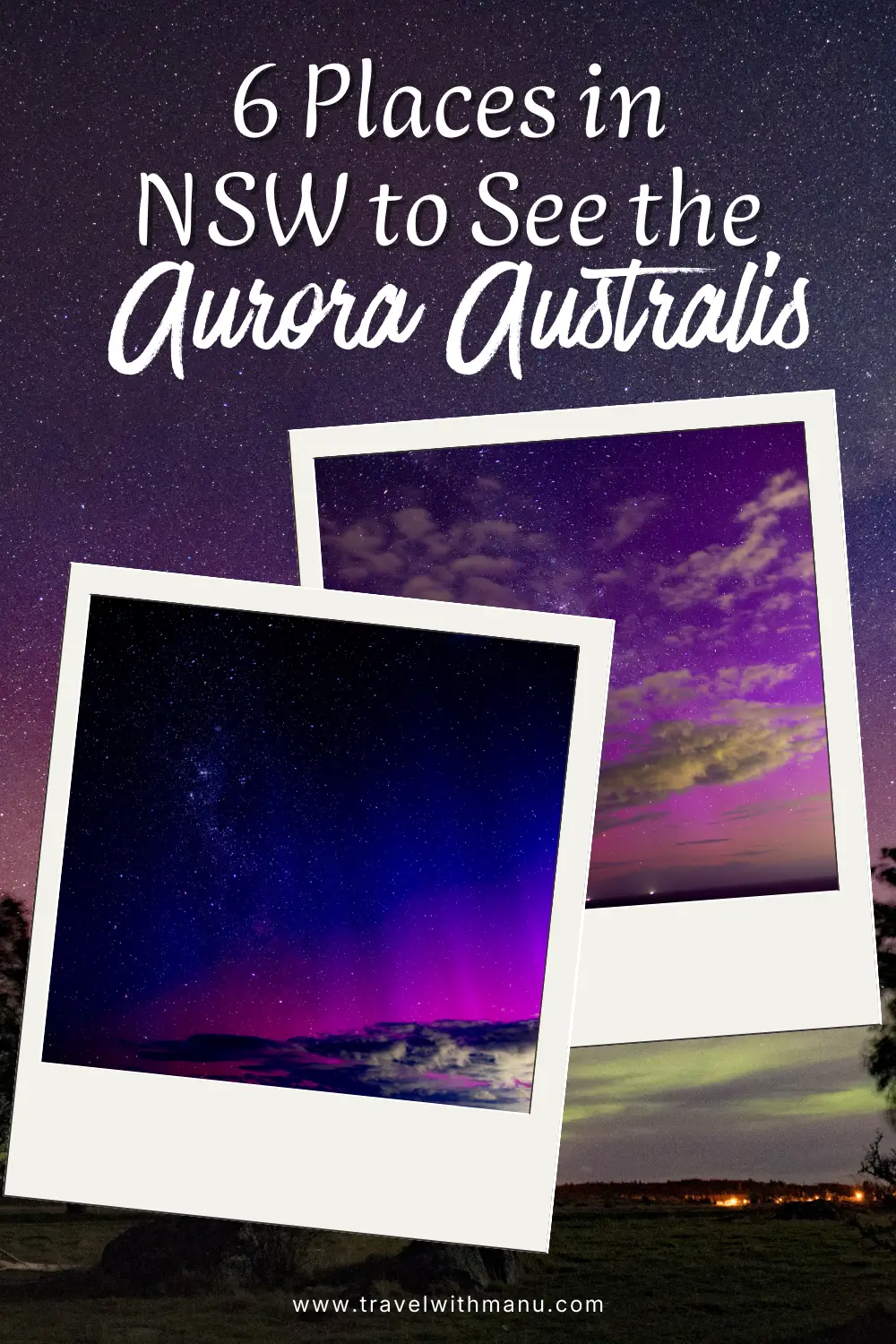
That’s when photos started popping up from around New South Wales (NSW). Pink skies. Red glows. Light sitting low on the horizon. People zooming in on their phones like, “wait… is that actually the aurora?”
Auroras in NSW are rare, but that January event showed they can happen. And once you know that, it’s hard not to keep an eye on the sky just in case.
Wait, What Even Is the Aurora Australis?
Quick version first. The Aurora Australis is basically the southern version of the Northern Lights. Same idea, different side of the world. When the sun gets a bit wild and sends extra energy our way, that energy interacts with Earth’s magnetic field and ends up lighting up the sky.
The colours come from gases high up in the atmosphere. Oxygen is what usually gives you reds and greens. Nitrogen can add purples and blues. In places like NSW, red and pink tones are far more common than green.
Most people only know the Northern Lights because more people live up there, and it’s easier to see them regularly. The Southern Lights don’t get the same attention, even though they happen just as often.
January was unusual because auroras usually behave better in winter. Longer nights. Darker skies. Summer needs everything to line up really well. And in January, it did.
Strong solar activity, clear weather, and suddenly, people in NSW were seeing colour where they didn’t expect to see anything at all.
It wasn’t a full-on light show everywhere. Sometimes it was just a glow. Sometimes it lasted minutes. In some cases, it appeared as a faint glow and only lasted a few minutes, disappearing before you even realised what you were seeing.

Things Most People Don’t Expect
A lot of confusion around the Aurora Australis comes from seeing dramatic photos taken in very different parts of the world. What the Southern Lights look like in NSW can be quite different.
The aurora stays low on the horizon
In NSW, the aurora usually sits low near the southern horizon rather than overhead. Instead of sweeping across the sky, it often looks like a band or glow hovering above the landscape. It can be easy to miss if you’re expecting movement everywhere.
Red and pink are more common
Those bright green aurora photos online are mostly taken much further north or south. In NSW, the colours tend to lean toward reds, pinks, and soft purples. Sometimes it’s subtle, almost like the sky is tinted rather than lit up.
Phones often see it first
Modern phone cameras, especially with night mode, can pick up colour before your eyes do. Quite a few people only realised they were looking at the aurora after taking a photo and seeing unexpected colour on their screen.
It doesn’t have to be late at night
Auroras don’t follow a strict schedule. During strong activity, they can appear not long after sunset. Midnight isn’t a requirement, and some sightings happen earlier in the evening when people aren’t even thinking about auroras yet.
At first, it can look like cloud glow
At the beginning, it often looks like a strange glow in the clouds or distant light pollution. The giveaway is movement. If the colour shifts, fades, or slowly changes shape, there’s a good chance it’s more than just clouds.


How People Actually Track the Aurora
If you’re keen to see it for yourself, timing matters more than planning. Auroras don’t really give much notice, so most people rely on live updates and quick checks rather than locking anything in.
One of the most useful places to follow is the Aurora Australis Tasmania Facebook group. Even though it’s Tasmania-based, it’s often where the first real sightings start appearing, which can be your early hint that something bigger might be happening.
A lot of people also keep an eye on Aurora Forecast, which shows real-time maps of aurora activity. It helps you see how strong things are and whether it’s even worth stepping outside.
For official updates, the Bureau of Meteorology’s Space Weather Services is where the serious solar activity info comes from. It’s not flashy, but it’s reliable.
Most of the time, if nothing’s happening further south, nothing’s going to happen in NSW either. When these sources start lining up, that’s when people start paying attention.
How to See the Lights Without Overthinking It
1. Get Away From City Light
This is the biggest thing. Even a small amount of city glow can completely wash out something as subtle as an aurora in NSW. If you can see streetlights or bright buildings nearby, chances are they are doing more harm than you think.
2. Pick a Spot That Makes Sense
You want somewhere dark, a little elevated if possible, and facing south. You do not need to hike up a mountain or go somewhere extreme. What really helps is having a clear view of the horizon with nothing blocking it.
3. Give It a Minute
Once you are there, do not expect anything to jump out straight away. Your eyes need time to adjust. The aurora often starts as a very faint glow that slowly becomes easier to notice the longer you stand there.
4. Let Your Phone Help You
Your phone can actually be useful here. Night mode or longer exposure settings can pick up the colour your eyes might miss at first. A lot of people only realised they were looking at the aurora after checking a photo they had just taken.
5. Be Patient and Stay Put
The lights are not constant. They can fade, disappear, and then come back again. Sometimes they show up briefly, vanish, and then return a little later…
Places in NSW Where the Aurora Has Been Seen
Snowy Mountains
Higher ground doesn’t guarantee anything, but it definitely helps when conditions are right. Clear nights here mean darker skies and cleaner views, especially away from towns.
January sightings were rare, but not impossible. When solar activity is strong enough, elevation gives you that extra edge.
Riverina
The Riverina makes sense straight away. Huge open landscapes, barely any light pollution, and long flat horizons.
When the aurora sits low in the sky, places like this give it room to show up.
More like a soft line of colour stretching along the horizon. Easy to miss if you’re not looking for it.
Wollongong and the South Coast
This one surprises people because it’s closer to Sydney than you’d expect. Once you head south toward Kiama or Shellharbour and leave town lights behind, the coastline opens up.
Facing the ocean means fewer lights and a clear southern horizon. During strong events, that combination really matters.
Blue Mountains
The Blue Mountains aren’t the darkest place in NSW, but some lookouts have still caught faint colour during intense storms.
Distance from built-up areas matters more than height here.
It’s the kind of place where the aurora looks more like something feels off in the sky rather than obviously colourful.
Jervis Bay
Jervis Bay already has a reputation for dark skies, and that helps a lot. Open water to the south means fewer lights and a cleaner horizon.
During rare events, subtle colour has been spotted reflecting over the ocean. It’s quiet, understated, and easy to miss if you’re expecting fireworks.
Stanwell Tops
Stanwell Tops gets attention mostly because it’s close and easy to reach. When aurora alerts start popping up, this is one of the first places people try.
Conditions need to be exceptional, but the open view and elevation give it a chance during strong storms.
For really dark skies, Warrumbungle National Park and nearby Coonabarabran are about as good as it gets in NSW.
Go In Hoping, Not Expecting
If you head out to look for it, keep expectations low. Sometimes it’s faint and fleeting, gone before you’re sure what you were seeing.
But when it does show up, even briefly, it’s one of those moments that makes you stop and stare.
And once you know the Southern Lights can reach NSW, it’s hard not to glance at the sky every now and then, just in case.

I love exploring new places and sharing the travel tips, food finds, and experiences that help you plan your next adventure.
Join the
Journey
Sign up for new itineraries, travel notes, and practical guides to help you explore the places I love most.
I love exploring new places and sharing the travel tips, food finds, and experiences that help you plan your next adventure.
Join the
Journey
Sign up for new itineraries, travel notes, and practical guides to help you explore the places I love most.

Count me in as one who had never heard of Southern Lights. Now I have something new to add to my bucket list.
Great tips to see the dancing lights. I did not realise that iphones can see the colours before us! I haven’t even seen the Northern Lights but one of these are bucket list item.